Navigating Azure Open AI: the Art of Effective Prompt Engineering
Welcome to my
blog! I am excited to share insights and knowledge about prompt engineering, a
fascinating field at the intersection of language and technology. Through my
recently completed course, I have delved into the art of crafting precise and
effective prompts to harness the power of AI models. Join me on this journey as
we explore the nuances of prompt engineering and its impact on shaping
intelligent outputs.
It is somewhat
acceptable that people are losing jobs because of AI or automation, but there exists
some rise of new roles such as prompt engineer, Annotator, etc. As a part of
learning the new technologies, I found prompt engineering was sounding
interesting and it is how I started learning this course.
What is Prompt Engineering?
Prompt
engineering involves skilfully crafting input instructions to guide LLMs (large
language models) in generating accurate and contextually fitting outputs. This
practice requires a deep understanding of language nuances and model
capabilities to ensure effective and relevant responses. Effective prompt
engineering combines linguistic finesse with an awareness of AI model behaviour
for optimal outcomes.
Open AI and Azure Open AI
Open AI is a
group that makes smart computer programs which understand and write in human
language. They made GPT, a special program that's good at talking and
understanding what people say. Open AI wants to make sure these programs help
everyone and are safe to use.
Azure Open AI
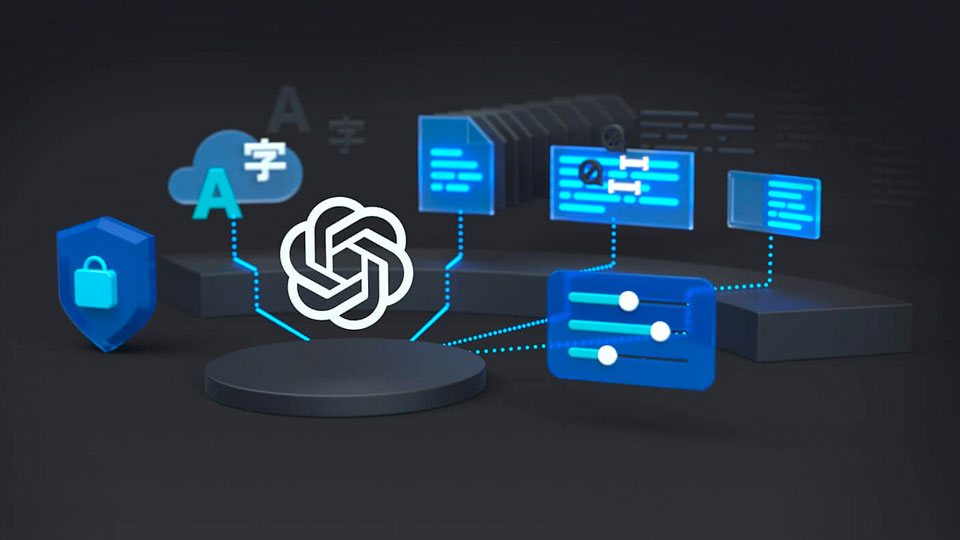
refers to the integration of Open AI's artificial intelligence technologies,
particularly its language models like GPT, into Microsoft's cloud computing
platform called Microsoft Azure. This collaboration allows developers and
businesses to easily access and use Open AI's advanced AI capabilities within
the Azure ecosystem. It enables users to build applications, tools, and
services that can understand and generate human-like text, enhancing various
tasks such as chatbots, content creation, language translation, and more, all
within the Microsoft Azure environment.
Git Repo:
Here is the reference for
learning the course of "Azure Open AI & Prompt Engineering Zero to
Hero with ChatGPT”: https://github.com/Azure-Samples/openai
If you are a Rookie here is basic
intro for the models that you can master through Azure
Open AI:
Davinci: Most capable
GPT-3 model. Can do any task the other models can do, often with higher
quality. This feature enables the user to give less instructions and get
maximum throughput from prompts.
Curie: Very capable, but
faster and lower cost than Davinci. It can be used as a general chatbot that
can answer your queries.
Ada: This is also like
that of Curie but mainly used in classification purposes and parsing the texts.
Babbage: Capable of
straightforward tasks, very fast, and lower cost. It accepts up to 2000+
tokens. Tokens are nothing but the chunk of characters or simply words.
Codex: Open AI Codex, a
remarkable AI creation by Open
AI, possesses the unique ability to understand
human language and translate it into code. This advanced model powers GitHub
Copilot, an innovative programming tool integrated with select IDEs such as
Visual Studio Code and Neovim, revolutionizing the coding process. Derived from
the renowned GPT-3 model, Codex has been fine-tuned for programming tasks.


Comments
Post a Comment